What you need to know about organic versus Fairtrade tea

tea_plucker

Fair trade in the United States is a system of product certification that enables customers to see that the products they are purchasing do indeed meet the government’s standards.


Many products that must be certified are agricultural products such as tea, coffee, fresh fruits and vegetables, honey, cocoa, cotton, juices, nuts, oil, seeds, rice, spices, sugar, and wine.

The Fairtrade Labeling Organization International, or FLO, is an international organization that audits the producers of such agricultural products to make sure that they meet Fair trade standards. Those companies that do meet these standards can be licensed to put a Fairtrade Certification mark on their products. In 2005, fifty-eight countries were FLO certified. The FLO often focuses on exports from developing countries to already developed countries.

Because most tea is grown on estates, the FLO is concerned about workers that are employed on these. In order for an estate and its tea to meet FLO standards, minimum health and safety as well as environmental standards must be met. This also means that no child or forced labor can occur. Workers must be given fair wages and decent working conditions.

Those people who are advocates of Fairtrade say that the market prices for products do not reflect the true cost of production because of economics as well as environmental and social costs. They tend to believe that Fairtrade will provide an alternative system of trading that allows economical development and better conditions for producers and workers in developing countries.

On the other hand, when you see an organic label on foods at the supermarket, you probably feel confident that the food you are looking at was grown under the strict environmental standards of the government. The United State’s organic seal, which has been around since 2002, guarantees that the fruits and vegetable certified were cultivated without the use of petroleum-based fertilizers or synthetic chemicals. An organic seal on a product also means that it was not genetically modified. But while the organic seal ensures safe environmental practices, it has nothing to do with labor conditions in the country in which the food was produced.

For example, Willamette Rive Organics, which is the biggest organic farm in Oregon, has been served several lawsuits that claimed that the farm violated minimum wage laws. It was later found that the farm exploited underage workers. Another episode took place at Pavich Farms in Arizona. In this case, laborers were not allowed to speak to inspectors. Cases like this pop up constantly. A large organic dairy and potato farm in Oregon, known as Threemile Canyon, is also facing accusations – in this case, sexual discrimination in hiring practices.

Furthermore, workers for organic companies get no higher wages or better benefits. In fact, of 188 organic farms surveyed in California, most did not pat a living wage or provide medical or retirement plans.

Whether or not you wish to purchase organic or Freetrade tea is up to you. But think first about the workers who made it possible to fill your cup with tea.

Bang, Bang! Gunpowder Green Tea Will Give You the Kick You Need

gunpowder-tea


If your tea party friends are looking for the freshest, most flavorful tea around, it’s time to introduce them to gunpowder green tea.

Gunpowder green tea comes from the Guangdong

and Zhejiang provinces of China.

As you can most likely tell from its name, it is a tea that is made from leaves that are hand or machine-rolled into small pellets. Because of this, it tends to look similar to actual gunpowder! There is an interesting legend about gunpowder green tea that you can share with those interested in purchasing the product.

As legend has it, the name gunpowder was given to the tea by an Englishman who thought that the small balls of the tea leaves, when rolled up, looked like gunpowder. In China, native residents refer to this type of tea as Siaou Chu, which means “large leaf”. Gunpowder green tea is also referred to as “pearl tea” or “bead tea” in China.

Gunpowder green tea is harvested in the month of April, as this is the absolute best time of the year for the quality of its leaves. During the process in which gunpowder green tea is made, the leaves are harvested and rolled up.

When the gunpowder green tea leaf is rolled up, the juices come out. These highly flavored juices would otherwise stay inside the leaf. The same holds true for the water inside the leaf – it is forced out, and this therefore reduces the moisture content of the leaf. The tea pellet actually keeps it shape and freshness better than tea that is not manufactured in the same way.

Studies have shown that people drink as much tea daily as they do water. Green tea, such as gunpowder green tea has a variety of positive health benefits. First of all, it contains no calories, fat, or carbohydrates. Secondly, it is a natural source of vitamins and mineral nutrients that have been scientifically proven to aid growth, digestion and sense of well-being.

Studies also point to the fact that gunpowder green tea is extremely rich in dietary antioxidant flavonoids. In fact, it may be even better for you than fruits and vegetables! The antioxidant flavonoids found in the tea actually protect cells as well as the immune system. Scientists agree that drinking green tea may even slow down the aging process and, in turn, helps people to live longer life spans.

Gunpowder green tea production first began during the Tang Dynasty, during the years 618 to 907. It was later brought to Taiwan in the 1800’s, and then on to North Africa, where it was used in preparation of traditional North African mint tea. Moroccans used it for their social gatherings. Today, most gunpowder green tea is machine rolled. However, the highest quality gunpowder green teas are rolled by hand. You can determine the freshness of the pellets of tea by how shiny they are. Very fresh gunpowder green tea will have a bright shine to it.


Here are some other articles you will like about Green Tea:

The History of the Japanese Tea Ceremony

Matcha tea: Drinking to health and good taste


Tea Party Girl asks: Are you a gunpowder green drinker?

A Tea Definition Cheat Sheet

different-tea-types


Your best friend is raving about a great new tea she found online.  She loves it.  You on the other hand, have absolutely NO IDEA what kind of tea it is.  No worries. Tea Party Girl has you covered. Here is our instant cheat sheet for figuring out what teas are what.

Spread it around and make it viral.  The internet could use a bit of help in this area!


  1. Assam-Like wines, teas are often named based on where the tea is grown. In this case, Assam tea is a black tea grown in Assam, India. Assam tea is the base for many of the breakfast teas, i.e. English Breakfast. Assam tea will give you a bold, malty flavor.
  2. Ceylon-Ceylon tea is also named for where it is grown, Sri Lanka (previously the island of Ceylon). It is a black tea with a lighter, crisper taste than Assam.
  3. Darjeeling-Sometimes called the champagne of teas because it is coveted above other teas and often more expensive. It is grown in India. Its taste is fruity and spicy. Most Darjeeling teas are black teas. If a Darjeeling tea is described as a “first flush”, it is describing when in the year the tea is harvested, as this affects the taste.
  4. Green-If a tea is green, it has undergone less oxidation, the process of the tea plant chemically changing to yield a different result (black teas go through the most oxidation). Green tea has traditionally been popular in the East; however its popularity in the West increased radically when the health benefits of green tea were introduced during the last decade or two.
  5. Lapsang souchong-This tea grows in China and is pan-fried resulting in a smoky, earthy brew. This is reminiscent of the days when tea came from China to Europe over land. It gathered the flavor of the traders’ fires. It is one of the more bold flavors of black tea and has been said to be an acquired taste. Also said to be popular with men.
  6. Oolong-a tea that is less oxidized than black tea and more oxidized than green tea. It is mainly grown in China and Taiwan.
  7. Yunnan-Named after a China province, it is also called Dian hong tea. It is often used in tea blends. High quality Yunnan is identified based on the amount of leaf buds or golden tips of the tea plant present in the tea. These are harder to pick which is why their presence is valuable. This tea turns bitter quickly if over-brewed, but can handle multiple infusions (the leaves can be brewed more than once).
  8. Earl Grey-a tea named after a British Prime Minister from the 1800s. It is flavored with the oil of bergamot, a citrus fruit.
  9. White-Tea is classified as a white tea when it includes young-growth tea leaves AND buds, resulting in its pale color. Oxidation of the tea is stopped through steaming or frying the leaves. It’s more delicate, therefore more care is needed in its handling, and often fetches a higher price. It cannot handle boiling water and needs to be steeped at about 180 degrees.
  10. Dragon well-Also named Longjing tea and drank by emperors, Dragon well is a high quality green tea and China’s most renowned out of about 700 of their teas. It is hand-picked which can increase the cost and pan-fried providing a delicious chest-nutty flavor.
  11. Rooibos-A red “tea”, more correctly a tisane, not made from the camellia sinensis plant, but the rooibos plant grown at this time only in South Africa. This “tea” is also called honeybush and comes in almost every flavor imaginable. The South Africans enjoy rooibos with milk and sugar and even share it’s mildness with their infants. It is becoming popular outside of South Africa because of it’s lack of caffeine and other health benefits, and it’s mention in the popular novel, The No. 1 Ladies’ Detective Agency.
  12. Honeybush- Also grows in southwest and southeast South Africa.  Honeybush is so named because its flowers smell like honey and it has a sweet taste.  Honeybush is similiar in many ways to Rooibos and is caffeine free.
  13. Yellow- Yellow tea usually implies a special tea processed similarly to green tea, but with a slower drying phase, where the damp tea leaves are allowed to sit and yellow. The tea generally has a very yellow-green appearance.The smell is sometimes mistaken for black if the tea is cured with other herbs.


Tea Party Girl asks:  What other types of tea should I add to this list?

Pu-erh: not your typical cup of tea

Pu_Erh_Organic_Tea_1


Pu-erh is a type of fermented tea that originated in Pu’er county in Yunnan, China. But don’t be fooled – Pu-erh is no ordinary tea!

You see, most teas are consumed by teas drinkers soon after they are produced. But not Pu-erh. Pu-erh is typically aged at least one to four years before it is ready to drink. In some cases, Pu-erh can be aged for fifty or more years before consumption!

“Why age a tea so long?” you may be asking. Well, over the time that the tea is aged, it ferments and develops an earthy taste that can be quite delicious to the tea drinker. Unlike other types of tea, Pu-erh does not lose its taste and good qualities over time.

Pu-erh has a strong, clean flavor with sweet undertones. It is often compared to the smell of fall leaves in a colorful pile. Tea drinkers enjoy a soothing cup of Pu-erh tea with breakfast foods such as biscotti, breads, fruits and pancakes. However, it can compliment just about any type of meal.

The Chinese consider Pu-erh a medicinal tea that aids the body in the act of digestion. Countless medical studies have been done on Pu-erh tea, and scientists agree that it may help to reduce cholesterol levels and saturated fats in the body. It may also help people to lose weight. Pu-erh tea contains no calories, fat, or carbohydrates. It is a natural source of vitamins and mineral nutrients that aid with growth as well as a sense of well being. It helps to protect the body’s cells as well as the immune system.

Pu-erh tea is sold in loose leaves as well as in hard brick-like masses of compacted tea. Pu-erh is usually made with old leaves, certainly not first flush leaves. The trees from which Pu-erh come from are a type found only in the Yunnan Province. Yunnan is often thought of as the birthplace of tea cultivation. These trees are referred to as having broad leaves that are covered with fine hairs. The leaves are typically larger than other tree leaves, and are made up of different chemical compounds.

During the processing of Pu-erh tea, the leaves are kept green and fermented before they are dried. The leaves are then formed into brick-like masses and are wrapped in paper. They are stored outside in humidity, air, and heat so that they have a chance to mature. After a while, the tea is then placed in an underground area for a few years. During this time, it becomes darker and richer.

When you make Pu-erh tea, you can usually brew it a lot longer and stronger than other teas. This is due to the fact that Pu-erh has a long fermentation and oxidation period when it is being processed.  So if your customers are desiring a rich, healthy tea that has an ages-old taste, Pu-erh is probably for them. Pu-erh can bring a little bit of extraordinary to an otherwise ordinary meal!

Matcha tea: Drinking to health and good taste

Green Tea Facial Is Easy from Matcha

Ok, so your friends are all drinking Starbucks Matcha Smoothies and you are wondering what this deep green tea really is.  Not a problem.  In this article I explain the ins and outs of drinking Matcha tea.  Check it out:

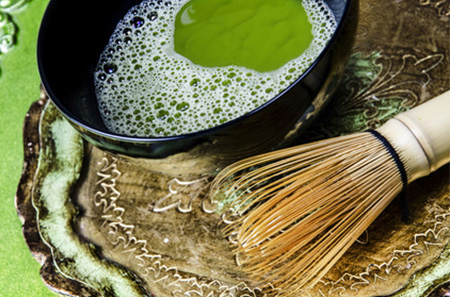
Matcha is a type of green tea that is fine and powdery in its finished form. It hails from Japan, and has been used since centuries long ago in Japanese tea ceremonies. This type of tea is sometimes spelled as “maccha”, so be sure not to get confused with the way in which it is spelled. Matcha and Maccha are the same tea.

Matcha not only makes an exquisite tea to drink, but it is also used to add flavor to foods such as mochi, soba noodles, grean tea ice cream, and wagashi. Adding a touch or sprinkle of this fine-tasting tea to such foods can lead to a otherworldy taste adventure! Matcha can be served with traditional Japanese sweets or a variety of other tasty treats that your customer may enjoy.

Nishio and Aichi are the most famous regions of Japan that produce Matcha. These regions are both located on the island of Honshu. Unfortunately, Matcha can be extremely hard to locate outside of Japan. However, some good Internet and business research skills will surely put Matcha within a tea cup’s reach!  I recommend trying: http://www.Harney.com

Many weeks before it is harvested, Matcha tea bushes are covered to prevent them from being exposed to the direct light from the sun. If the bushes are not covered, their growth will slow, and their leaves will become a dark shade of green. This means that more amino acids will be produced in the leaves, and cause the end tea product to be very sweet. After the Matcha tea leaves are harvested, they are laid out flat and given an opportunity to dry. Once they dry, some leaves crumble. The leaves that crumble are known as tencha. Only these tencha leaves are then are ground into a powdery, talc-like substance known as Matcha.

Matcha contains a high level of Catechins. If you are not already familiar with the term, Catechins are bioflavonoids, polyphenols, and powerful anti-oxidants that many scientists belive can fight off tumors and enhance the function of the human immune system. Matcha contains no calories, fat, or carbohydrates. It is pure and strong source of vitamins and mineral nutrients that help with a body’s growth and digestion. Many researchers also concur that drinking Matcha tea slows down the aging process and helps people live longer.

The benefits of Matcha and other green teas have become so popular today in North America, that these tea powders are actually being added to cereals, energy bars, candy, desserts, and chocolates that are eaten every day by millions of people. Matcha is also being widely used in a variety of drinks other than tea. It is used all over the world in tasty drinks such as lattes, milkshakes, smoothies… and even alcholic beverages! If you  want to combine health with fun, high quality, and good tatse, Matcha may be just what they are looking for.

Here are a recipe video to get you started:

If you liked this article read these also:

Which Tea makes great Iced Tea?

What is Kombucha?


Tea Party Girl Asks: Do you have a matcha recipe to share? If so please post it.